
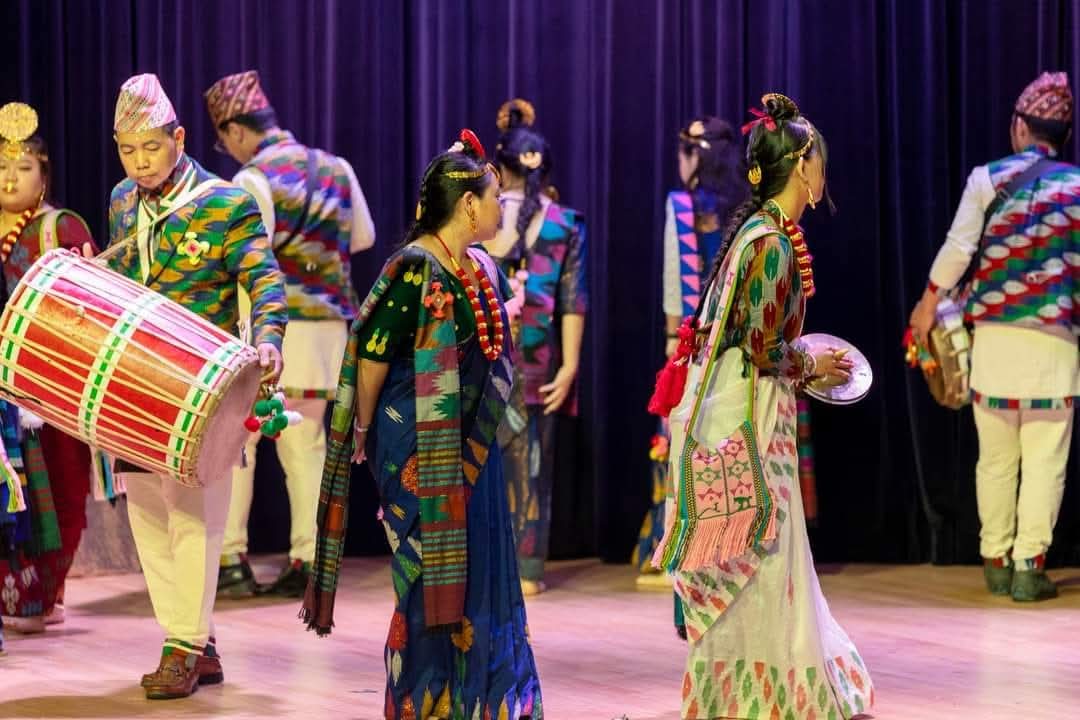
The Kirat people are an ancient group originating from the eastern Himalayan regions of Nepal, India, and Bhutan. The Kirat identity is shared by several ethnic groups, primarily the Limbus, Rais, Yakkha, and Sunwar communities. Each group within the Kirat community has a distinct clan system, language or dialect, and rituals, yet they share common cultural elements that tie them to the broader Kirat identity.
The Kirats are a deeply spiritual people whose traditions and beliefs center on nature and the spirits that inhabit it. The Kirati people are known for their reverence for nature, ancestor worship, and living in harmony with the forces that govern the universe that guide their way of life. Festivals such as Chasok Tangnam in the Limbu community and Udhauli and Ubhauli Sakela among the Rai community are celebrated to give thanks to nature for its abundance and seek blessings for the coming years. For the Kirati people, every natural element carries divine energy, and human life should be interconnected with it.
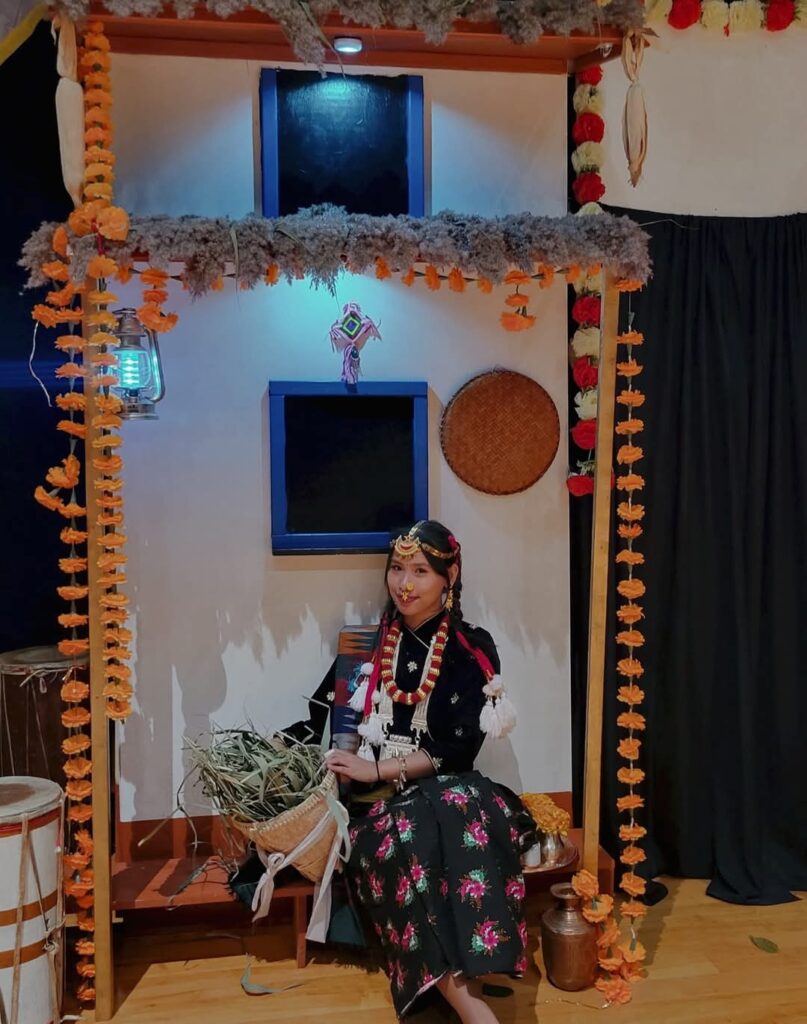
Traditional Limbu attire and celebration
The term Kirat also refers to the religion practiced by members of the Kirat community. The Kirat religion is also known as Kirat Mundhum, Kiratism, or Kirati. It is based on Animism and Shamanism, with rituals primarily focused on the worship of Mother Nature, ancestors, the Sun, the Moon, wind, fire, and the main pillar of the house. Religious rituals are conducted and overseen by Kirati priests known as Phendgaba or Samba in the Limbu community, and Nakkchong in the Rai community. These rituals are rooted in religious scriptures that preserve customs, habits, traditions, and myths passed down from the Kirati tribe’s ancestors, serving as guiding principles. The four primary Kirati ethnic groups each have slightly varying religious scriptures. While the worship of nature and ancestors is central to the Kirat religion, specific practices vary among the ethnic communities. The Rai community mainly worships Sumnima (a supreme deity believed to be Mother Earth) and Paruhang (the sky god), while the Limbu community worships Tagera Ningwaphumang. However, neither of these sects is ethnically exclusive and many Rai’s practice the worship of Tagera Ningwaphumang.

Kirat Community Organization of Akron, Ohio
Akron has a vibrant Kirat community, and many of ASIA’s clients identify with Kirat culture.
Written by Anisha L, Communications and Civic Engagement